
A Cross-Disciplinary Exchange at the SASEV Conference
The South African Society for Enology & Viticulture (SASEV) conference, held from 24 to 26 November 2025, once again showcased cutting-edge research shaping the future of the wine sector. This year, a dedicated workshop on wine consumers, culture, language, tech and food pairing, organised and facilitated by Dr Jeanne Brand (Department of Viticulture and Oenology, Stellenbosch University), highlighted the growing importance of cross-disciplinary collaboration in addressing industry challenges.
While traditionally dominated by viticulture, oenology and sensory science, this workshop intentionally brought agricultural economists, and economists into the conversation, an important reminder that the complexities facing the wine sector require integrated perspectives from across disciplines and departments.
The workshop provided a snapshot of innovative research on South African wine consumers. Representing Agricultural Economics, Dr Melissa van der Merwe opened the workshop with a presentation titled Beyond the glass: South African Wine Experiences. She explored the shifting nature of wine from a commodity to an experiential product, arguing that wineries must deliver authentic, meaningful experiences if they are to remain competitive in a crowded market. Her contribution underscored the value of economic and behavioural insights in complementing technical wine science.
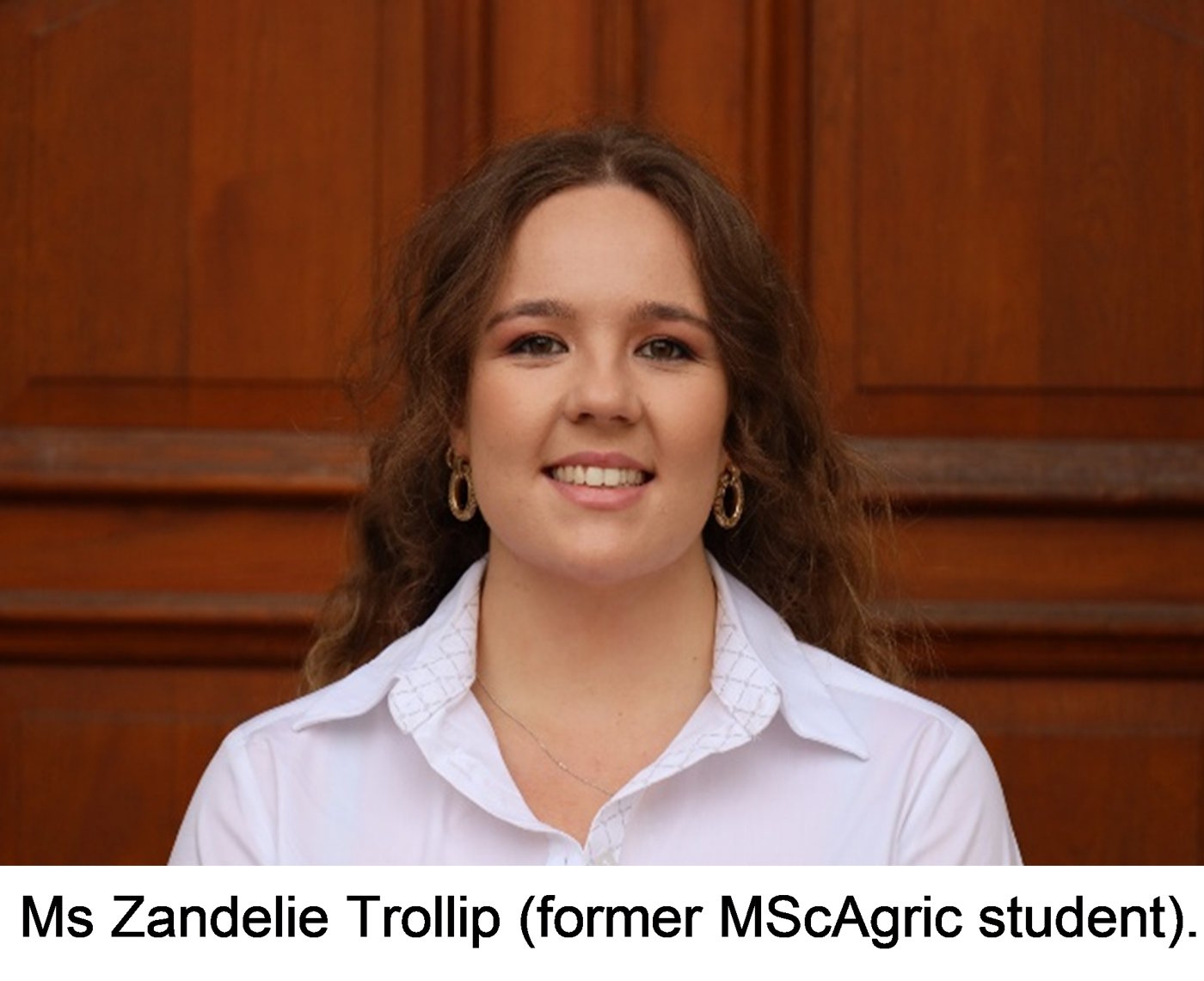
A second agricultural economist, Ms Zandelie Trollip, former MSc student supervised by Drs van der Merwe and Brand, presented her research on wine and food pairing behaviour. Her findings revealed nuanced patterns in consumer choices, some reinforcing classical pairing principles, others diverging in ways that highlight the deeply subjective nature of sensory experiences. Differences in behaviour between home and restaurant settings, as well as demographic influences, reinforced the importance of understanding context when interpreting consumer decisions. Ultimately, the social environment of consumption emerged as the most powerful driver of preferences.Reflecting on her experience, Trollip shared: “It was inspiring to learn about the exciting work happening in wine research, and also to realise how much opportunity still exists for consumer-focused studies. I am excited to see what comes next!”
 The remainder of the workshop discussions revolved around global and local wine marketing trends, online purchasing behaviour, preferences across languages and cultures (isiXhosa, isiZulu and Sotho), and township-based wine education technologies. Crucially, these themes mirror the focus of keynote speaker Ms Yvette van der Merwe, President of the International Organisation of Vine and Wine, whose address; The economics of wine: Supply and demand trends in the context of sustainability and innovation, emphasised the industry’s need to understand consumer demand to remain resilient and economically sustainable.
This workshop demonstrated the value of integrating diverse expertise, from sensory science to economics to technology, to address the wine industry’s most pressing challenges. For Stellenbosch University, it is yet another example of how cross-departmental collaboration strengthens research excellence and contributes meaningful insights to industry stakeholders.
For research opportunities or collaborations on wine related matters, please contact Dr Jeanne Brand (jeanne@sun.ac.za) or Dr Melissa van der Merwe (vdmm@sun.ac.za).