A Cross-Continental Alliance for Water Resilience
By Dr Willem De Lange
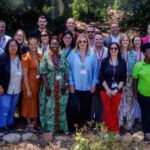
As part of the African-Bavarian Alliance 2.0, Stellenbosch University and Hochschule Weihenstephan-Triesdorf (Germany) co-hosted a three-day conference to co-develop a joint research agenda and prepare a collaborative proposal for an upcoming Horizon 2020 funding call. Convened and facilitated by Dr Jan Greyling from the Department of Agricultural Economics at Stellenbosch University, together with German partners, the event brought together scholars, practitioners and policymakers to explore how integrated water management can enhance resilience to scarcity, with a focus on residential and agricultural water use. The initiative aligns directly with Stellenbosch University’s strategic priority to strengthen international research partnerships and deepen global impact across critical sustainability themes.
To frame the conversations that followed, Dr Willem de Lange (Department of Agricultural Economics) delivered an opening keynote titled “Long-term water management in South Africa”, offering a historical and forward-looking perspective on the country’s water challenges. His insights set the foundation for three days of discussion, comparison and agenda-setting.
The first day focused on South Africa’s experiences, particularly insights from the Western Cape’s ‘Day Zero’ crisis. Discussions covered urban–rural water allocation, governance, practical strategies from local water management associations, farmers’ perspectives and innovative technological solutions, including AI-based monitoring.
The second day expanded the scope to regional and international water governance challenges, featuring country perspectives from Tunisia, Kenya, Senegal, Ethiopia, Zambia and Germany. The discussions aim to identify common challenges and practical solutions, as well as transferable lessons.
The final day started with a technical tour of the Berg Water Scheme to provide practical insights into the design and operation of integrated bulk water management systems. The proceeding closed with a collaborative session focused on reflective dialogue and the development of a forward-looking research agenda for targeted research funding calls.